
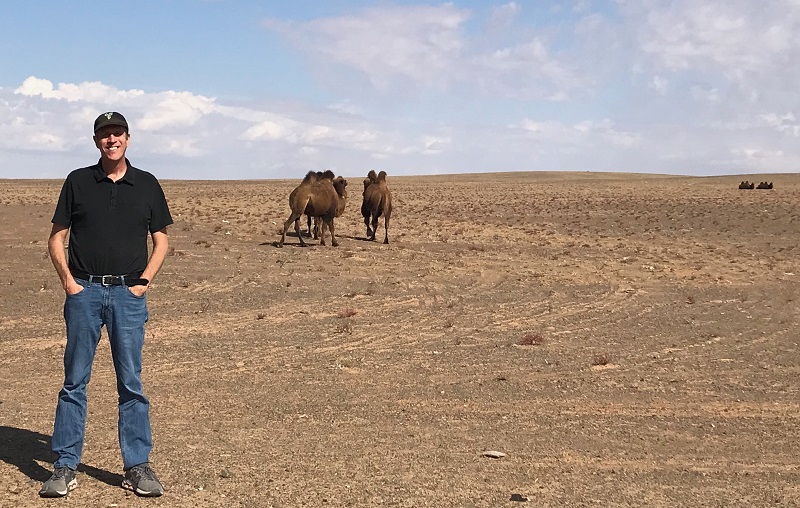
In the first week of October, I traveled throughout Inner Mongolia in China, visiting giant cities of glass and steel, paying my respects at the Mausoleum of Genghis Khan, and taking photographs of rural and desert landscapes.
I was conducting “in the footsteps” travel research of Western visitors who, in the early twentieth century, traveled the Tea Roads from Kalgan in northern China (nowadays Zhangjiakhou), made their way through the Gobi Desert and Khüree, the cultural and religious center of Mongolia (nowadays Ulaanbaatar), and ended their trip in Russia.
At the Mausoleum of Genghis Khan, I scolded two teenagers who were walking around a stupa in the wrong direction.
They ignored me.


I crossed the land border into Mongolia, jumping off the bus and helping Mongolians carry boxes encased in tape and twine. We passed through Chinese immigration and customs, collectively exhaling as our bus entered Mongolian territory. For my benefit, one passenger shouted out in English, “Freedom!”
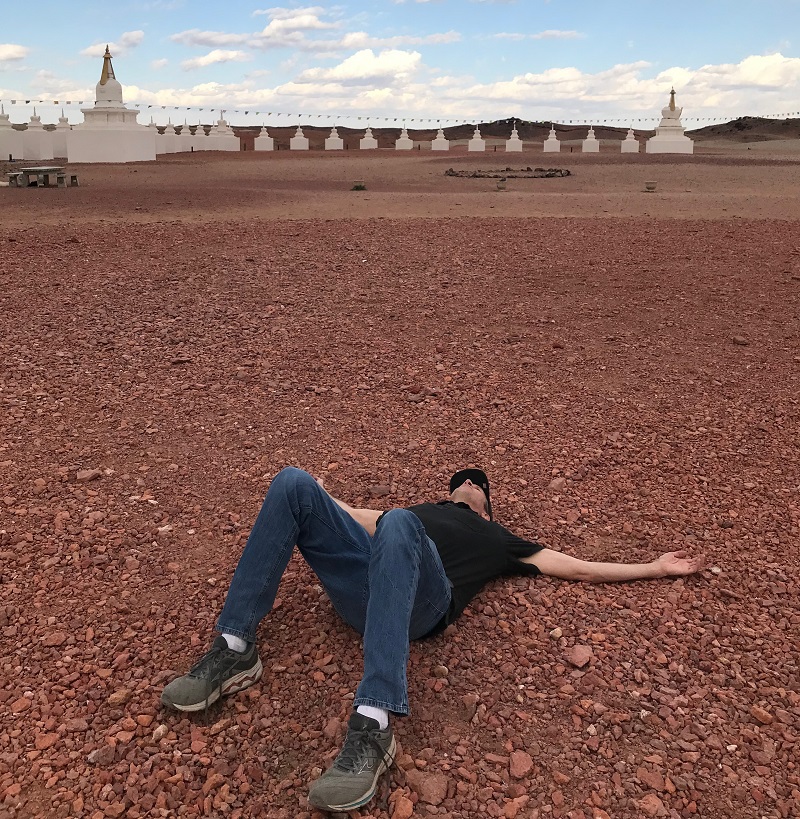
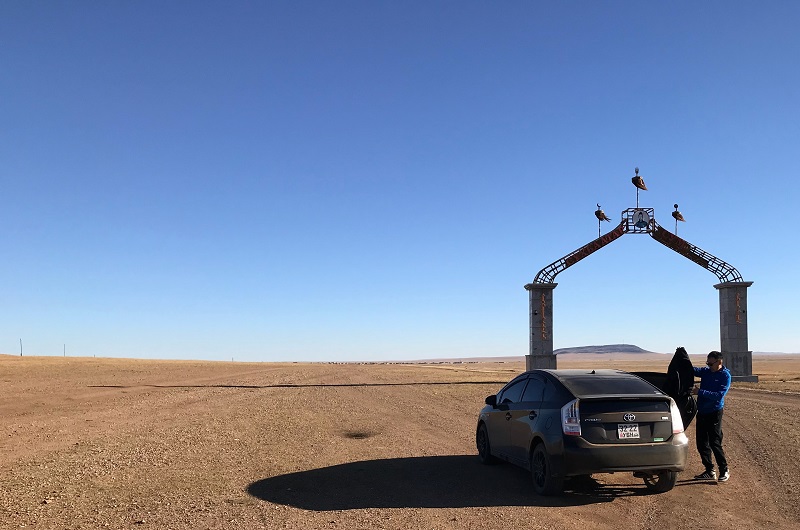
For the rest of October, I fought Ulaanbaatar traffic (a “Minister of Traffic” now sits in the government cabinet), lay in the “world’s energy center,” and traveled cross-country in a Prius looking for the right dirt road. I met a “Ninja” gold-miner panning for gold in his kitchen near the Russian border, searched for the birthplaces of twentieth-century Mongolian writers, and, in a far-eastern Mongolian city, saw the mammoth concrete institutions of the Soviet era making way for glass residential towers and American-styled town homes.

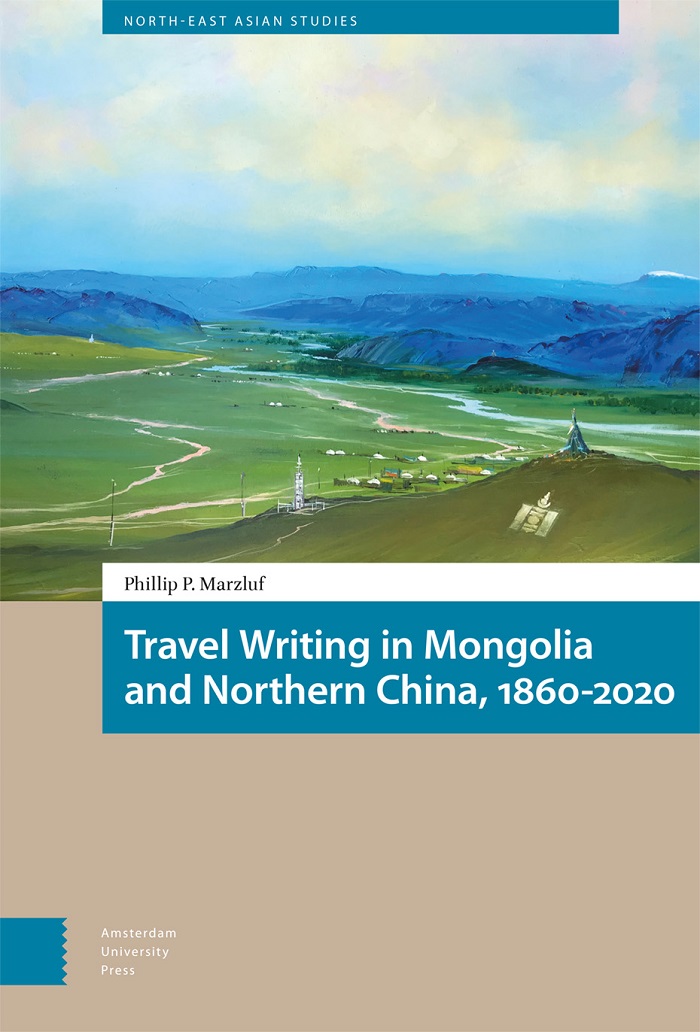
This “in the footsteps” travel project extends my recently published Travel Writing in Mongolia and Northern China, 1860-2020 (Amsterdam University Press, 2023), in which I explore how North American and European travelers have represented Mongolia and Mongolians in ways that have been useful for themselves and their readers – though oftentimes with dangerous consequences for Mongolians.
More specifically, I was exploring an immense crime scene for a new nonfiction narrative project, A Death in the Gobi.
In the summer of 1913, George Grant, a Scottish employee for a Chinese telegraph company, was executed alongside three Chinese co-workers by renegade Inner Mongolian troops. Grant had been protecting the telegraph lines and the southern Gobi station from these troops that were fighting for the independence of a new Mongolian state, one that would unite northern Mongolians with their southern Inner Mongolian neighbors as well as eastern Mongolians in Manchuria.
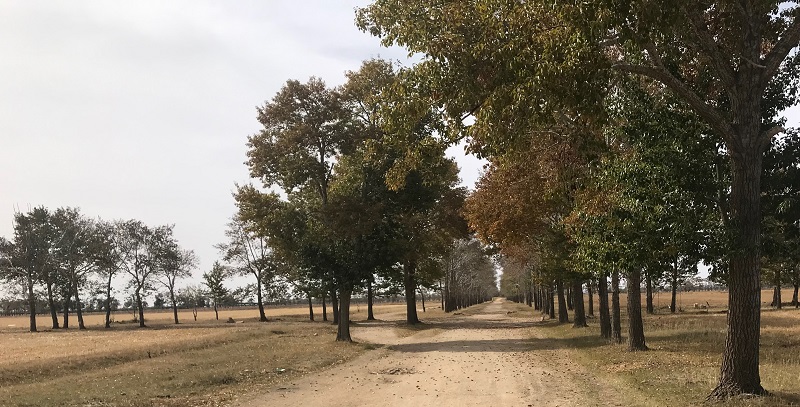
My research on Grant includes extensive library and archival research, a trip to his birthplace on the western coast of Scotland, and a visit with his great-nephew in the Scottish Highlands. Using old Christian mission atlases and other maps, I tried to locate where the telegraph stations would have been and, as the final photograph below indicates, the place where Grant and his co-workers may have been killed.

Partly through this tragedy, I hope to inform readers about the cultural history of travel on the Chinese, Mongolian, and Russian Tea Roads.
— Phillip P. Marzluf, Professor
 K-State English