
Art galleries are not just great places for first dates, they’re also great places to observe other people on first dates.
It’s November 2021 and the Omicron variant is racing through Britain, like much of the rest of the world. I’m on a delayed and much-anticipated fellowship at the Bodleian Libraries at the University of Oxford to comb through their extensive archive.

Taking a break from research, I’m wandering through the Ashmolean Museum, as I’ve done several times before. I’m there because I’m interested in a particular painting: John Everett Millais’s portrait of the Victorian art critic and social theorist, John Ruskin.
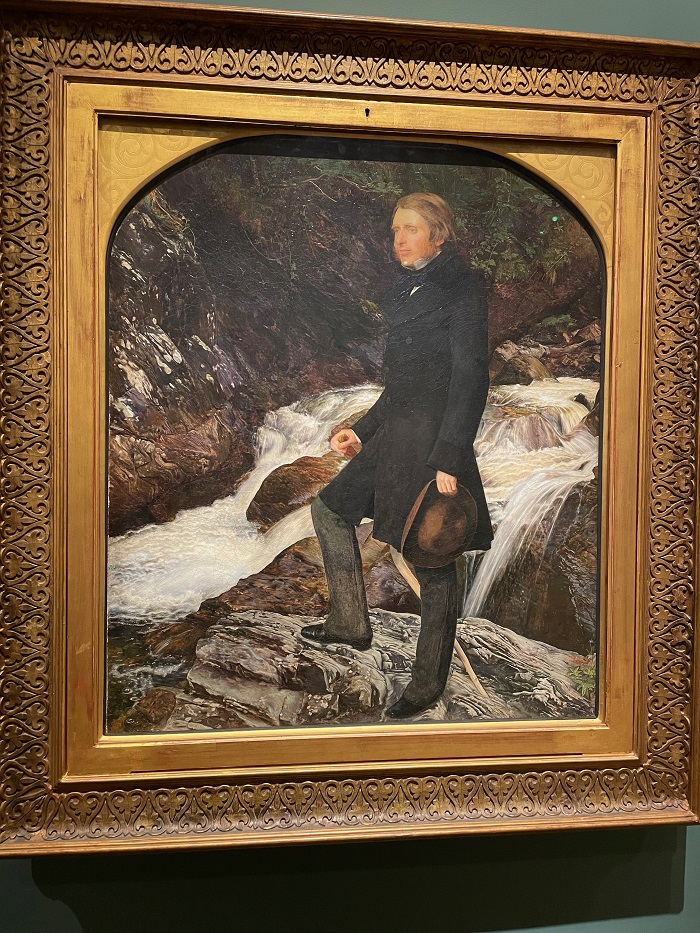
Today, I’m not the only person looking at the portrait. Maintaining a discreet and government-sanctioned two-metre distance, I listen to a man explain (mansplain?) the story behind the painting to his date.
“He never slept with his wife, you know,” he tells her. “They were all on holiday together in Scotland: Millais, Ruskin, and his wife. And Millais falls in love with the wife and finds out she’s never had sex with Ruskin. Two years later Ruskin’s marriage is annulled and she’s married to Millais.”
I resist the urge to interrupt. I want to let them know that the story he tells when he sees Ruskin’s portrait illustrates one of the arguments of my book project so neatly that you might think I’ve made it up.
What my middle-aged suitor’s anecdote illustrates so perfectly is the twenty-first-century fate of John Ruskin, one of the most influential and important thinkers of the nineteenth century. Rather than his groundbreaking art criticism or provocative political economy or early environmentalism, what this particular visitor to the Ashmolean remembers about Ruskin is his apparent problem with women. And, indeed, the stories get worse. Never mind the non-consummation and annulment of his marriage, Ruskin is also notorious for his unsettling middle-aged infatuation with the adolescent Rose La Touche.
Compounding these persistent stories are twentieth-century academic accounts of Ruskin’s work, especially his lecture “Of Queens’ Gardens,” which turned Ruskin into the poster child for Victorian patriarchy, a kind of metonym for the insidious face of nineteenth-century gender relations.
Yet despite the prevalence of such understandings of Ruskin, closer attention to his writing and that of Victorian women writers had persuaded me that Ruskin’s relationship with women was both more complex and more productive that many had previously acknowledged.
I knew, for example, that many Victorian women writers read Ruskin with great admiration. After reading his art criticism, for example, Charlotte Brontë wrote enthusiastically, “[h]itherto I have only instinct to guide me in judging art; I feel now as if I had been walking blindfold — this book seems to give me eyes” (2: 94), while Elizabeth Gaskell declared were she “shut up in prison or on a desolate island” (Norton 1: 174) the book by a living author that she would most desire would be Ruskin’s Modern Painters.
Women writers also frequently responded positively to Ruskin’s writing publicly. Women-run journals such as the feminist Victoria Magazine referenced and reviewed his publications, the novelist Margaret Oliphant devoted a chapter to him in her survey of nineteenth-century writing, The Victorian Age of Golden Literature (1892), while the poet Alice Meynell not only penned the introduction to Blackie and Son’s 1907 edition of Sesame and Lilies and Unto this Last, but she also published a guide to Ruskin’s work, entitled John Ruskin (1900), only a few months after his death.
Such admiration from nineteenth-century women convinced me that the twentieth-century dismissal of Ruskin as arch-patriarch of the Victorian period was inadequate and inaccurate. As a result, I set out to write a book that would analyse women writers’ responses to Ruskin’s work — and his to theirs.
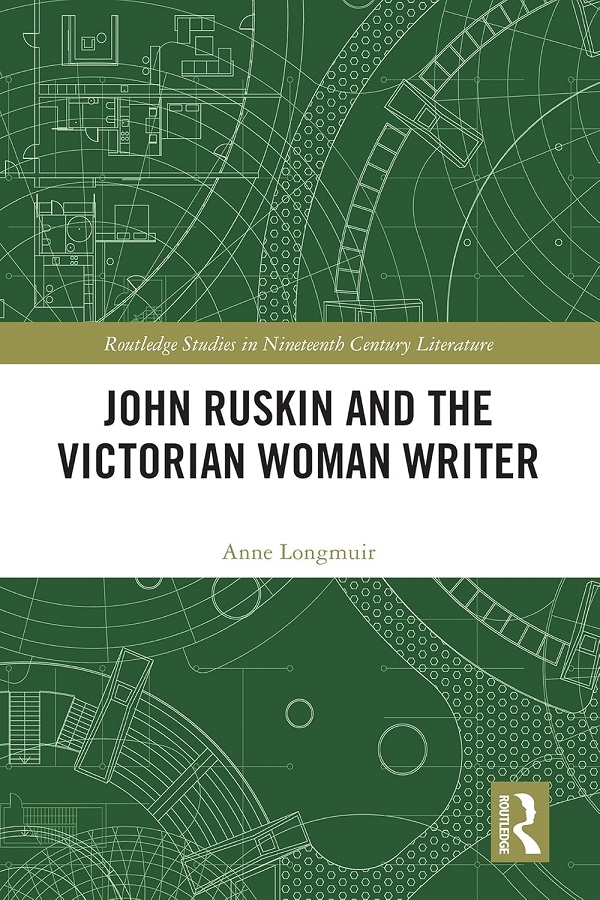
The resulting book, John Ruskin and the Victorian Woman Writer (Routledge, 2025), explores the personal and literary relationships of John Ruskin with four major women writers of the Victorian period: Elizabeth Barrett Browning, George Eliot, Elizabeth Gaskell, and Christina Rossetti. Examining the moments of agreement and disagreement between Ruskin and these writers, it attempts to advance our understanding of the complex web of influence that existed between Ruskin and prominent women of the period.
Ruskin has often been understood as having a problem with women — by the public and academics, alike. By contrast, my book establishes the opportunities that Ruskin’s art theory offered women writers engaged with social questions and the apparent influence of these writers on Ruskin’s own emerging political economy. United by their shared disquiet at the social costs of industrial capitalism, Ruskin and these women writers emphasize affect over commerce, cooperation over competition, as each uses their writing to promote the bonds of community in public life more generally.
I doubt this story will be told on a first date at the Ashmolean any time soon. I hope, however, my book goes some way to unsettling what we think we know of Ruskin and his relationship with women. And as we ourselves struggle with the climate emergency and the social costs of technological changes that upend our lives and work, I hope we recognise that this eclectic, playful, contradictory, and genre-defying writer offers us more than titillating Victorian gossip.
Works Cited
Brontë, Charlotte. The Letters of Charlotte Brontë. Edited by Margaret Smith, Clarendon, 1995-2004. 3 vols.
Norton, Charles Eliot. The Letters of Charles Eliot Norton. Edited by Sara Norton and M.A. DeWolfe Howe, Houghton Mifflin, 1913. 2 vols.
— Anne Longmuir, Professor
 K-State English