
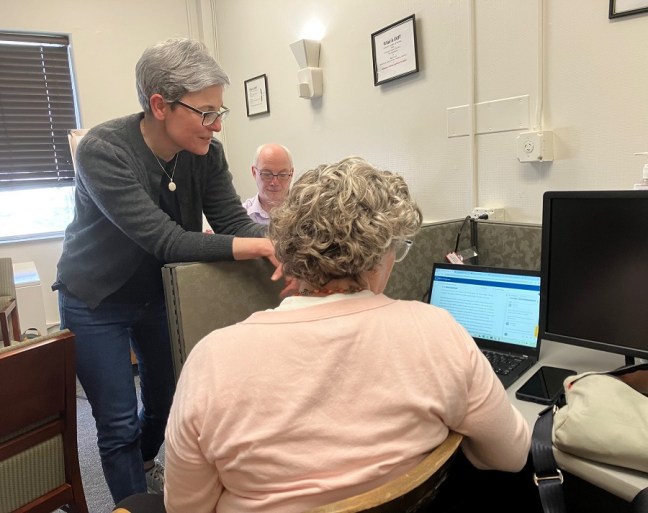
The Digital Humanities Center in the Department of English hosted a drop-in event for faculty and students on Wednesday, April 30 to explore annotating literary texts in a digital environment.

Textual annotation, as we know, is a practice of active, engaged reading that can be traced back to the very early development of the technology of writing. The creation of marginalia, from doodles and interlinear markings to extended self-reflective comments, speaks to the social function of annotation.
As literary scholars, we know how beneficial the practice of annotation is for both research (as both praxis and as a distinct area of study) and teaching. As a pedagogical tool, annotation aids in reader comprehension, encouraging moments of self-reflection and develops close reading skills and critical thinking.
For the drop-in event, we wanted to encourage participants to engage in a form of communal, collaborative annotation to demonstrate the array of possibilities available to active readers in a digital environment.
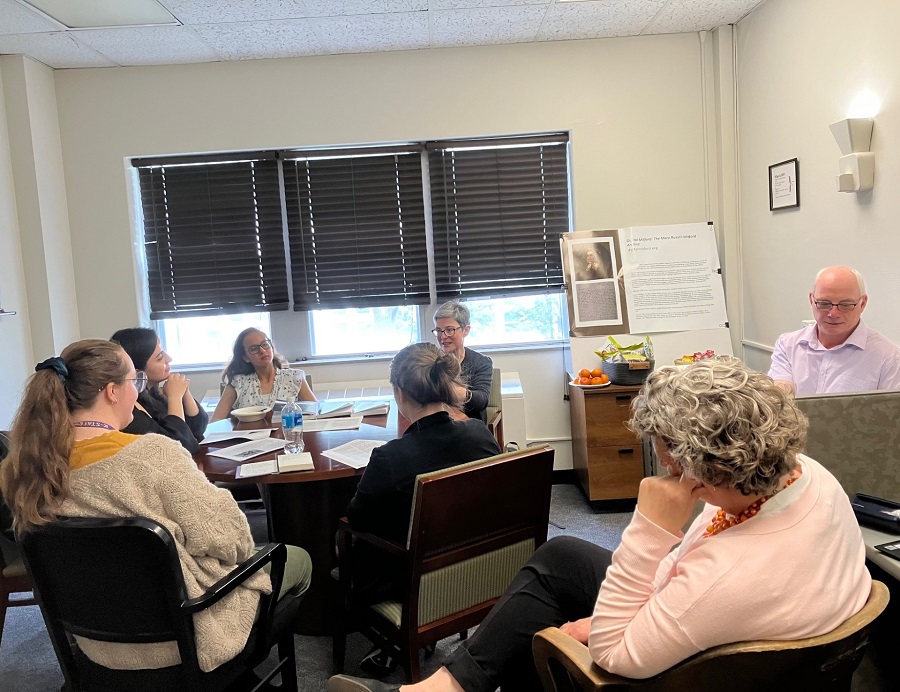
As part of the Graduate Track in Literature’s “Year of Mystery,” our text for annotation was Arthur Conan Doyle’s “The Speckled Band,” and we used the COVE (Collaborative Organization for Virtual Education) digital platform.
COVE is an open-access initiative developed by literary scholars to publish peer-reviewed material and hosts a variety of tools to create student-built projects. COVE’s annotation feature brings marginalia into the digital age, allowing students to add explanatory or interpretative notes, links, images, and even video to a literary text.

The COVE platform not only allows for the more familiar experience of annotation, where the reader’s annotations are in direct conversation with the text, but also offers a shared, collaborative experience of annotation, where readers can respond to each other. In this respect COVE enables a communal reading and annotation experience where different contexts and interpretative approaches are brought together in the creation of meaning.
As part of our discussions during the drop-in event, we talked about some of the benefits of this type of communal activity, including yielding insights into Doyle’s short story such as the use railway networks and stations as locations and plot devices.

Through COVE’s map function, we were then able to plot the story’s key locations, creating a visual representation of the continent-crossing geography of “The Speckled Band.”
Look for more “Doing DH” events in the semesters ahead!
— Mark Crosby, FSA, Associate Professor / Director, K-State Digital Humanities Center and Anne Longmuir, Professor
 K-State English