
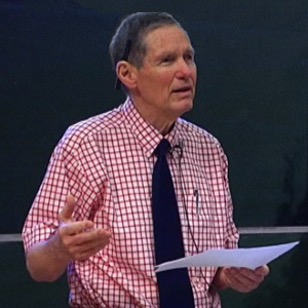
On the night of September 25, the Graduate Concentration in Writing, Rhetoric, and Technical Communication (WRTC) sponsored a virtual event to celebrate the life of Peter Elbow (Professor Emeritus, U Mass Amherst), who died on February 6 at the age of 89.
Elbow was a towering figure in the teaching of writing, and many of the concepts that he either invented or popularized – freewriting, voice, playing the believing and doubting game, among others – have become ingrained in the vocabulary of the field.
Elbow was a troubled graduate student writer in the 1960s. He dropped out of Harvard because he was terrified of writing and could not produce for his teachers. After serving as an instructor for several years, Elbow returned to a Ph.D. program and devised a writing process for himself. His experiences as a student and teacher would make up his first book in composition studies, the 1973 Writing Without Teachers, which went on to influence generations of writing teachers.
In the September 25 event, approximately 35 faculty, graduate students, undergraduates, and alumni joined members of the WRTC Concentration, who presented lightning talks to share Elbow’s contributions.
Dr. Han Yu looked at Elbow’s first article, the 1968 “A Method for Teaching Writing,” in which he promoted the idea of students taking more ownership over their writing and inventing their own assignments.
Mary Ayedemo (MA ’26), a WRTC graduate student, talked about how Elbow’s freewriting “encouraged you to invite bad writing to your writing space.” She offered student testimonials about how useful freewriting had been to them.
Dr. Ania Payne talked about Elbow in terms of “low stakes writing,” accessible activities that allow students to “find their own language.” By the time that students get to “high stakes writing” – the assignments that mean a lot to their grades – they will have already done a great deal of writing.
Dr. Abby Knoblauch reminisced about the time she watched Elbow present: when he spoke, he closed his eyes, very much in line with his article, “Closing My Eyes as I Speak.” According to Elbow, we need to forget about our audiences – at least temporarily – when we begin to compose.
Finally, Dr. Cydney Alexis talked about Elbow’s final article, published in Composition Studies in 2022, in which he invoked the magical nature of naming something: it can enact change. Dr. Alexis related Elbow’s ideas to the new name of our graduate concentration, which has shifted from Composition and Rhetoric to Writing, Rhetoric, and Technical Communication. What change will this new name provoke?
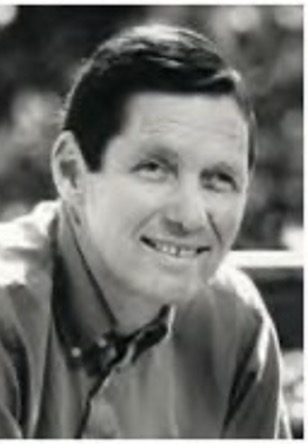
Elbow was relentlessly optimistic about students and writing over his career. Looking back at his first book about writing, he says, “It wasn’t until I wrote Writing Without Teachers that I discovered something remarkable: everyone in the world wants to write.”
— Phillip Marzluf, Professor
 K-State English