

On Wednesday February 21, 2024, we held our 20th Annual Career Seminar for undergraduate and graduates students in English.
Back in 2005, this event began as a way to empower our English majors and MA students who expressed concern or anxiety about their career prospects, given the overwhelming cultural myths about what you can do with an English major:
Myth #1 English majors can’t get jobs
Myth #2 English majors are only prepared to teach English
The reality, of course, is that English prepares you for a vast range of careers and the ability to change careers throughout your life.
A degree in English also leads to careers with various rewards, including financial, intellectual, personal, and social rewards.
Our alumni demonstrate this range of professional opportunities and personal success, as we learn each time we conduct our alumni survey.
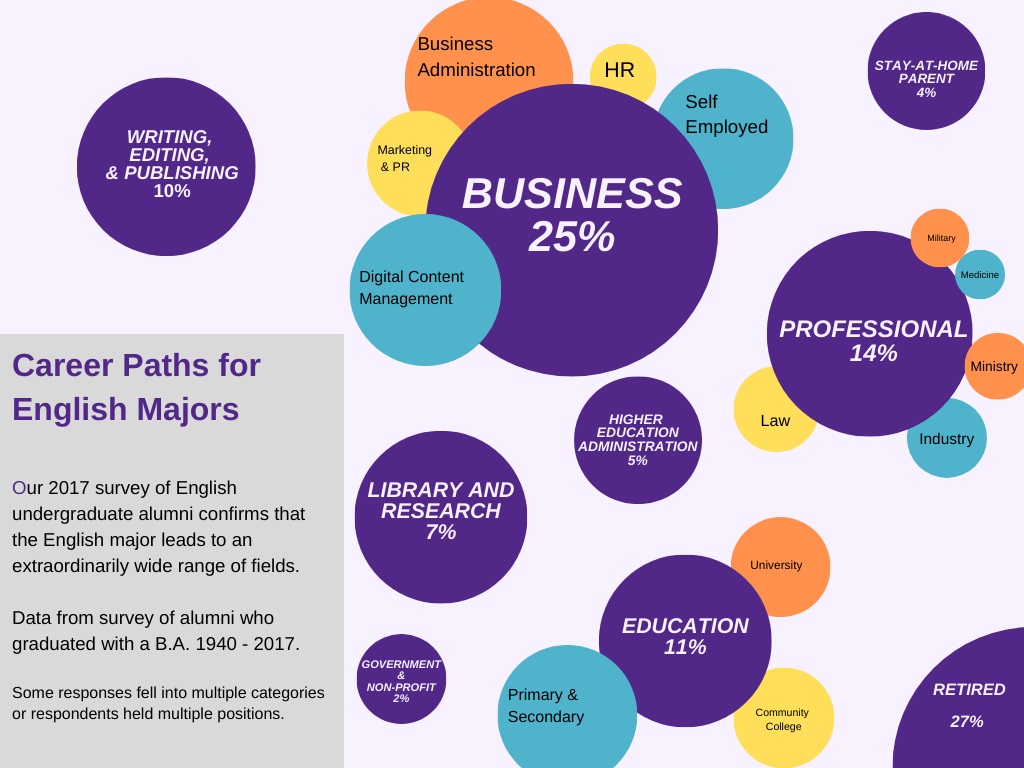
Alongside education, business ranks highest as a career pathway, with 25% of B.A. alums and about the same number of M.A. alums thriving in this field. (Read more about the most recent survey results for our undergraduate alumni and for our graduate alumni in earlier blog posts.)
At this year’s Career Seminar, we had additional resources at hand to combat those persistent cultural myths, thanks to the American Academy of Arts & Sciences (AAA&S) and their Humanities Indicators project.
Last October, the AAA&S released state-by-state data on “Employment Outcomes for Humanities Majors.” As their website explains, “the state profiles available below explore what each state’s humanities majors do for work, how much they earn on an annual basis, their unemployment rate, and how they compare to graduates from other fields.”
Like many other states in the U.S., Kansas has Humanities majors who are thriving in their chosen professions and contributing to their state’s success.


From “Humanities Majors in Kansas: What They Earn & What They Do” (PDF)
Thanks to these data points from the AAA&S, we can offer even more reassurance to our students that they can pursue a degree in English and secure a rewarding career — indeed, that the first goal can lead directly to the second.

It’s always great to help English undergraduate students and grad students identify their skills, passions, and next steps towards careers. We can’t wait to see what our current students will accomplish!
— Karin Westman, Department Head
 K-State English