

The Spring ‘24 in-person section of English 287 “Great Books” asked the question, “What Makes a Great Book?”
We read novels, a short story, a graphic memoir, and a collection of poetry, and students wrote final papers addressed to a specific audience that explained what made one of those books great.
Then, as a final multi-media project each writer adapted a partner’s paper into an infographic.
Can you tell what audience each paper addressed and what it argued made the book great?
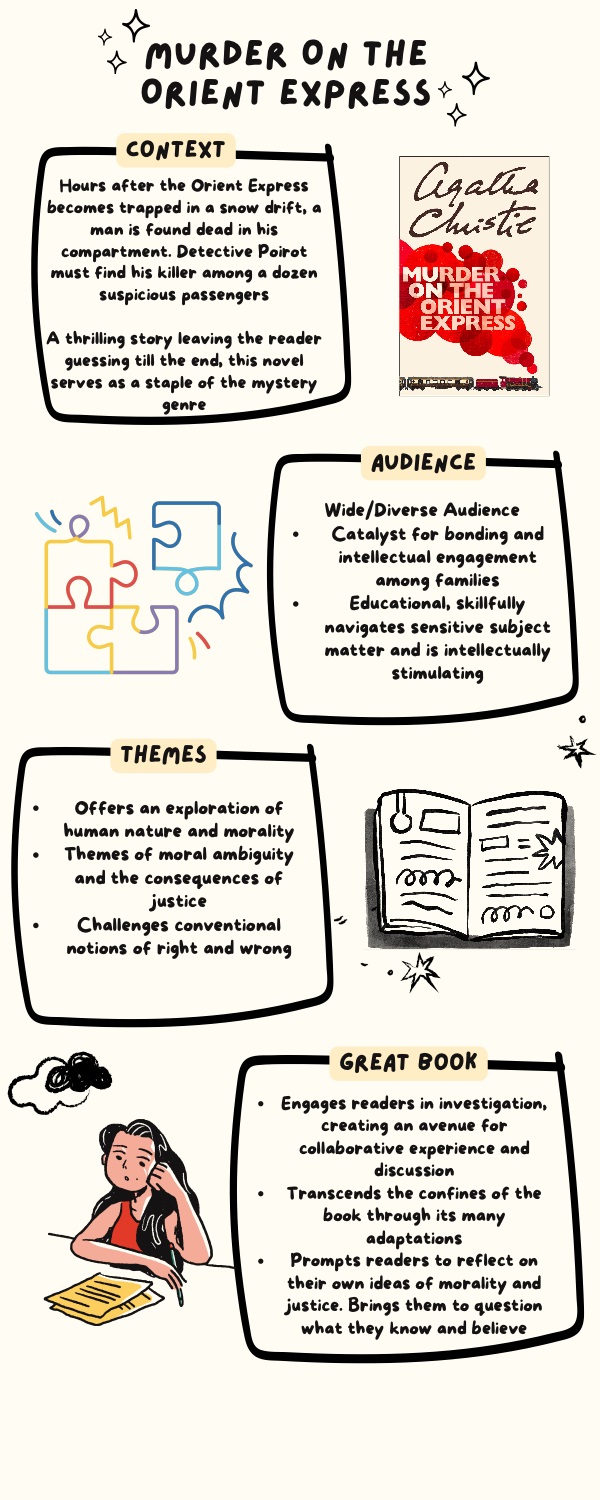
(Casey Grennan, BS ’25 Social Science, adapting Katie’s paper)

(William Lingenfelser, BA ’27 Philosophy, adapting Bryn’s paper)

(Gaberiel Schenk, BS ’27 Anthropology, adapting Jacob’s paper)

(Kate Weisner, BS ’25 Human Development and Family Science, adapting James’s paper)
You can see that Agatha Christie’s best-selling and oft-adapted Murder on the Orient Express could appeal to high school teachers, aspiring writers and filmmakers, general readers, and college students.

(James Wilhoft, BS ’26 Advertising and Public Relations, adapting Kate’s paper)
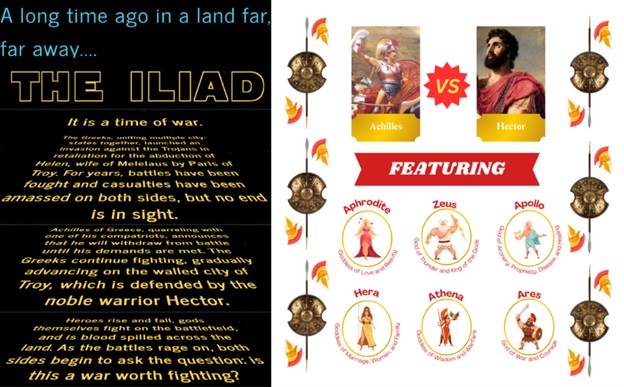
(Bryn Reed, BA ’24 English, adapting Will’s paper)
Some books tell sweeping stories that appeal to and affect myriad generations.
And sometimes Canva templates work to highlight very different qualities in the same great book:

(Jacob Sweet, BS ’26 Social Science, adapting Gabe’s paper)
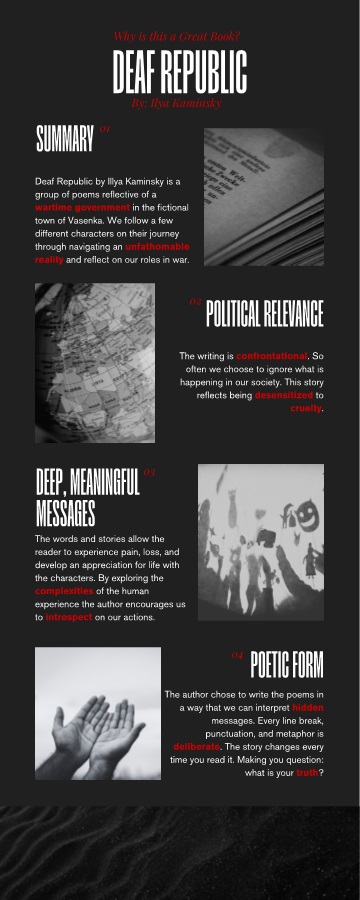
(Katie Albertson, BA ’27 Business Administration, adapting Casey’s paper)
On the last day of class as we talked about these infographics and decided that we care about great books because they foster communities between authors and readers, across times and places, and among busy students who don’t have much time to read for fun. Great books open our eyes to new ways of seeing the world, and they help us better understand our own places in that world.
I’ll be teaching Great Books again this Spring 2025 and would love for you to join the conversation!
— Wendy Matlock, Professor
 K-State English