
Today’s blog brings you two examples of creative work that mesh the visual and theoretical in compelling ways.
These two pieces — a documentary film/personal research reflection filmed and edited by Elizabeth Elliott (MA ‘25) related to the Kansas Land Treaties project and a glossary/zine/theory/creative writing hybrid collaboratively created by Aidia Kite (BA ’24) and Khloe Kuckelman (BA ’25) — will educate, entertain and challenge you in the very best of ways.

Elizabeth Elliott explains:
The short film, “The History of Washunga: Water and Connection to the Land for Kanza People,” explores the flooding of Washunga, Oklahoma to create Kaw Lake in the 1970s. This film examines the location of Kaw lake as a historical, political and economic site of power through archival research of primary and secondary sources. For the video itself, the choices I made with visuals and audio were intentional to identify how I came to understand different questions, connections, and relations. One notable feature is the audio switches between voiceovers for background context, and the audio of a conversation I had with a friend, Margo Losier, to explain and share the different stories I saw within my research. My research started to yield answers about the flooding of Washunga, but as connected to a bigger and broader picture about the loss of multiple communities and related to continued cultural cultivation today. In addition, while this research did not come to a definite conclusion or the complete picture of the story, it does start to recognize how systems of power and the realities of settler colonialism continues to be part of putting together this story within the past, present and future.
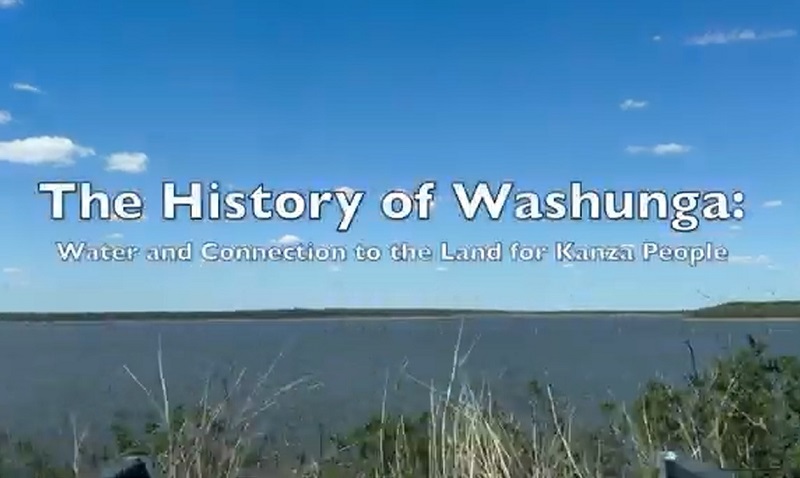
Watch “The History of Washunga: Water and Connection to the Land for Kanza People” at https://youtu.be/H9tE51RMKNA
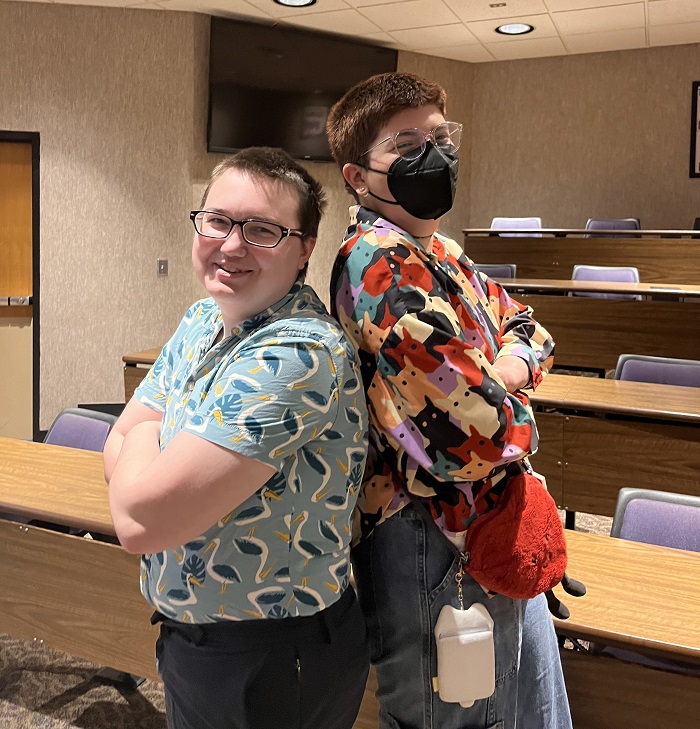
Aidia Kite and Khloe Kuckelman’s piece, “Indigenous Storytelling: A Glossary,” is, as they state in their abstract, “A compilation of analyses, creative work, and quotes in a woven essay inspired by Eve Tuck and C. Ree’s essay ‘A Glossary of Haunting’” and Jeff Barnaby’s film Rhymes for Young Ghouls.
The power of this piece, which includes definitions, autobiography, comics, theory, images, and more, will bring you to return to it again and again.

See a PDF of “Indigenous Storytelling: A Glossary” at Indigenous Storytelling_Kite_Kuckelman_2024
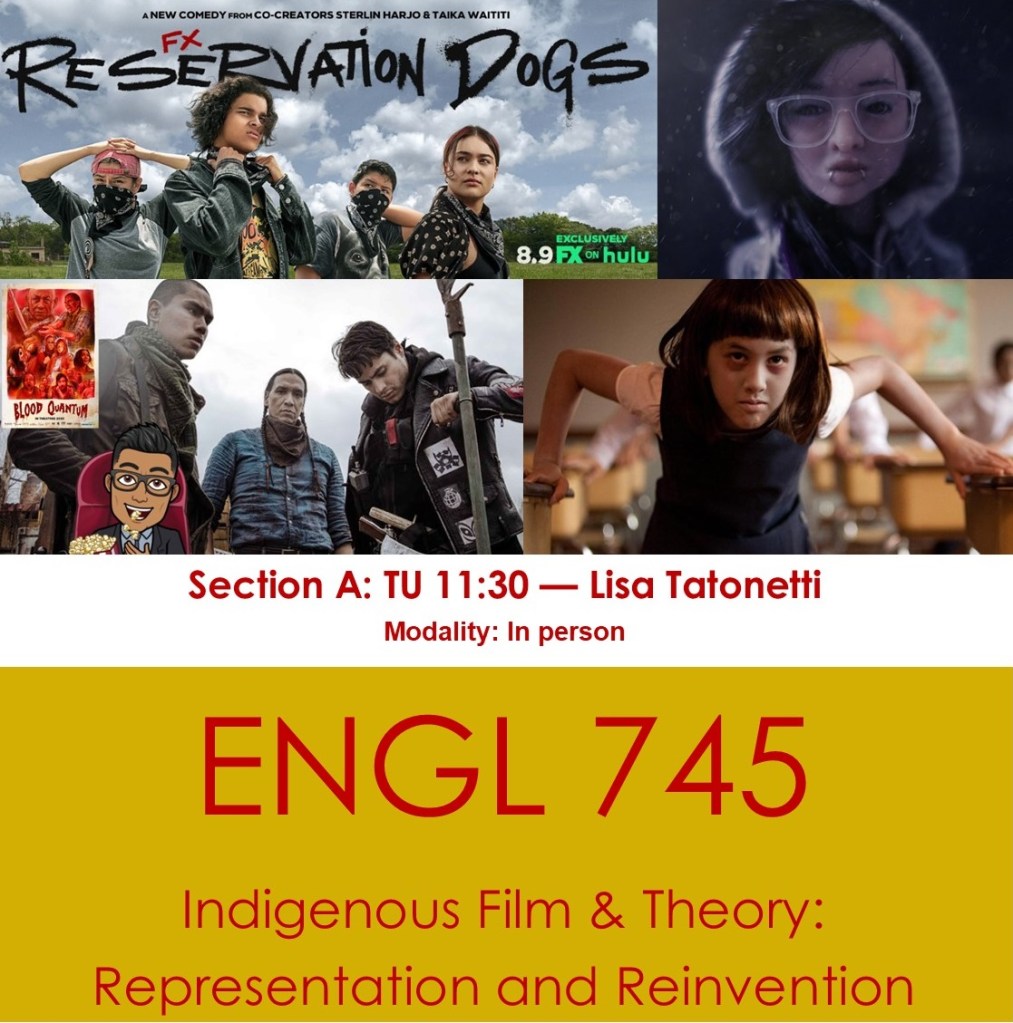
These fabulous projects were outcomes of Kansas State English Department’s Spring 2024 offering of ENGL 745 “Indigenous Film.”
The course introduced students to a selection of the significant body of film and theory produced in Turtle Island (the U.S. and Canada) and Aotearoa (New Zealand).
Students watched, discussed, and wrote about Indigenous feature films, shorts, documentary film, and animation (Joseph Erb’s shorts, Molly of Denali, and “Biidaaban. The Dawn Comes”).
They also considered genre through an analysis of coming-of-age narratives (Smoke Signals, Boy, “Two Cars, One Night,” Whale Rider, Rhymes for Young Ghouls, Four Sheets to the Wind, “Three Little Boys,” and Reservation Dogs), horror feature and short films (Rhymes for Young Ghouls, Blood Quantum, “Savage,” “Wakening”), humor (Rutherford Falls, Reservation Dogs), Indigenous futurisms (“The 6th World,” “The Visit,” “Wakening,” and “Biidaaban, The Dawn Comes”), and children’s programming.
Throughout this rich body of work, ENGL 745 looked at how Indigenous writers, directors, and actors claim their own space and tell their own stories in twentieth and twenty-first century film.
An array of impressive critical thinking, writing, and creative visual and audio production arose from students’ engagement with Indigenous voices and issues across the course of the semester. It’s a pleasure to share a small taste of that work with you here.
— Lisa Tatonetti, Professor of English / Coffman University Distinguished Teaching Professor
 K-State English