Kansas State’s 2023 Indigenous Peoples Day, which took place on Monday, October 9th was a celebration of the creative arts.
The program, “Writing, Singing, and Shaping the Future,” included talks by Kickapoo writer, singer, children’s book illustrator and comic book creator Arigon Starr and Comanche playwright and film scholar Dustin Tahmahkera.
A fantastic lunch, catered by Native chef Jason Champagne, featured a staged reading of Tahmahkera’s comic short play, 9-1-1 Comancheria. There were breakouts on: Indigenous Librarianship and Data Sovereignty with K-State McNair scholar Abi Whitney (Choctaw) (BA ’24) and librarian Audrey Swartz (Miami); on Indigenous Animation with University of Oklahoma professor Joanna Hearne, and an artist’s talk and display by K-State Alum Justice Catron (Cherokee). (In case you missed it, Justice’s installation will be up all month in the Union’s William t. Kemper art gallery!)
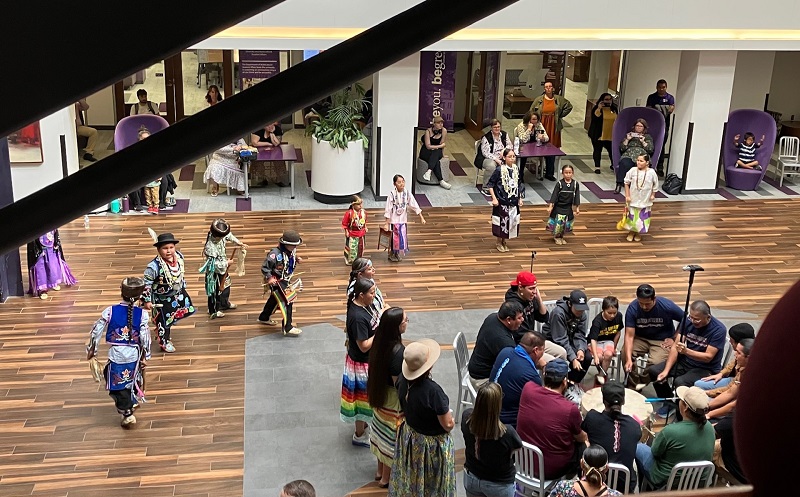
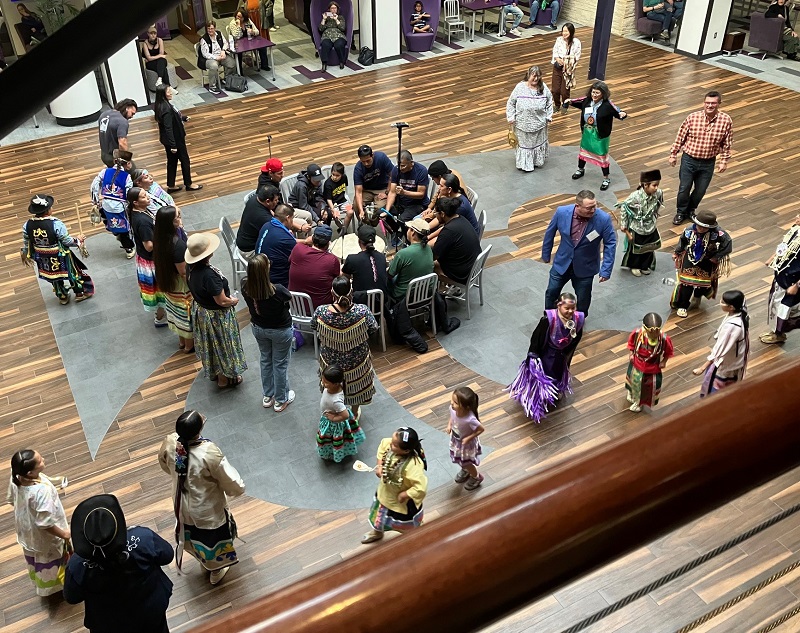
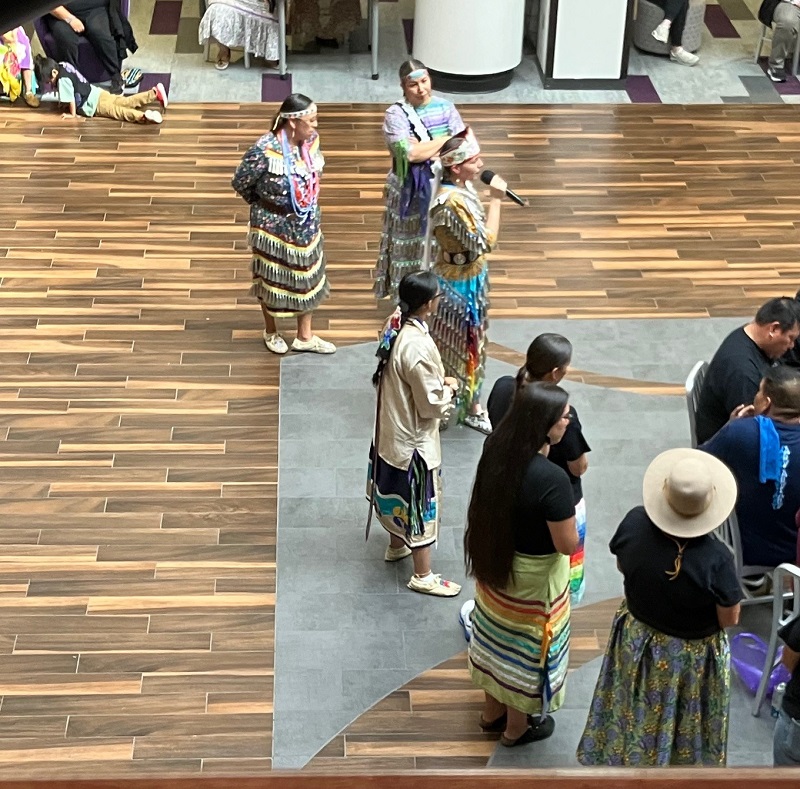
The event closed with much joy, power, and beauty as the Little Soldier Dance Troupe from the Prairie Band Potawatomi Nation gave a special exhibition performance in the Union courtyard. With over 30 singers and dancers that ranged from young children to elders, the dancers generously shared their talent and culture and invited IPD goers to learn and participate. It was an incredible way to close that day.
The energy and power of Indigenous Arts in the 21st century were demonstrated throughout the day. As our bloggers today speak to Tahmakhera’s talk and the Little Soldier Dance Troop performance, I want to begin with some words about the ever-fabulous Arigon Starr.
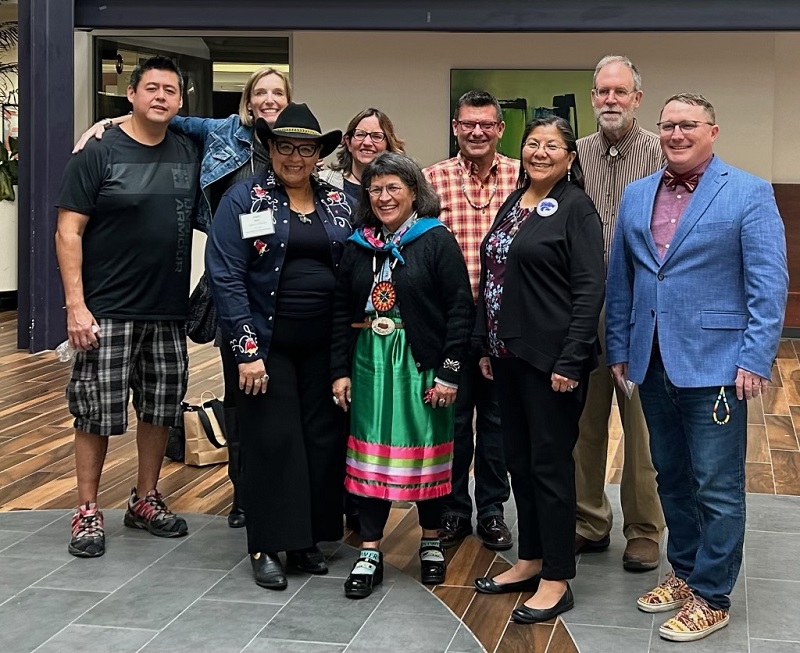
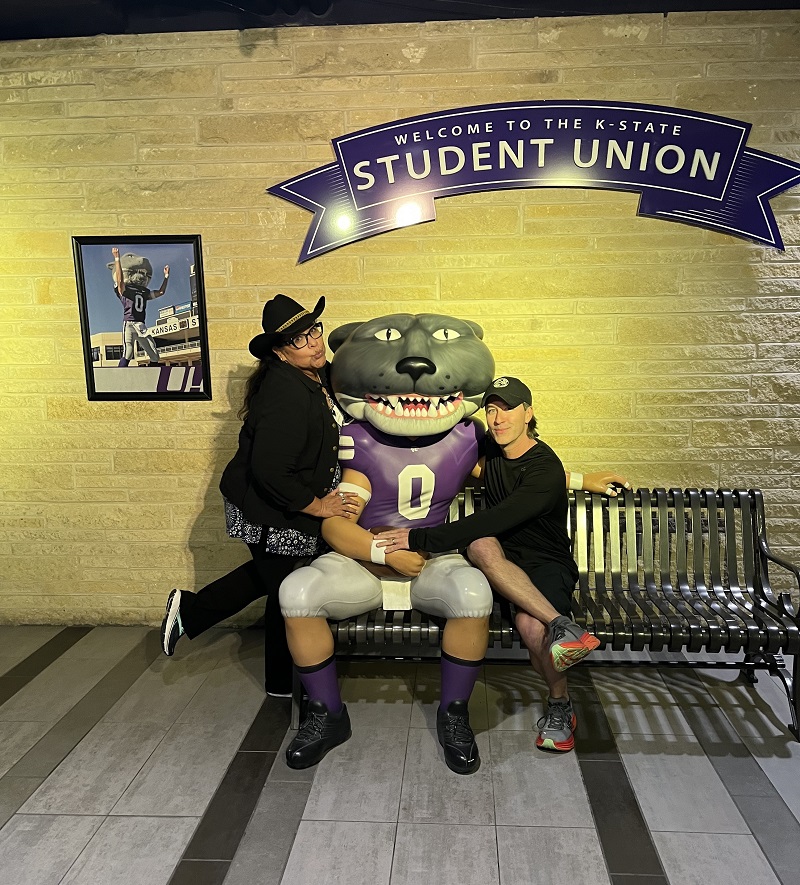
A tired but happy Indigenous Faculty and Staff Alliance with Arigon Starr at the end of a great day. (9 October 2023)
In “Arigon Starr: Storyteller for Life,” Starr shared the trajectory of her career, from her childhood love of drawing to her work behind the scenes in LA creative production, to her music, playwriting, comic book development, and more. Starr’s advice to the many students in the room was to imagine and create what they love. She shared her own experiences of sometimes finding herself outside dominant expectations for Native women and Indigenous people more broadly to argue that if it didn’t exist, then it was time to create it. Along with her new children’s book The Contender, and a hotly anticipated new volume of her comic Super Indian, Starr is currently working on a ten-play cycle that follows the intertwined stories of a Native family across ten decades.
As a longtime Arigon Starr fan, it was a thrill to learn more about her creative journey and also to see her hilarious performance as the Comanche caller reporting a “home invasion” in 9-1-1 Comancheria.
— Lisa Tatonetti, Indigenous Faculty and Staff Alliance / Professor of English
Professor Michele Janette, who both attended and volunteered at the event–helping serve the delicious lunch of wild rice with chicken, green beans, and blue corn cakes with wojapi (a berry sauce)—had this to say:
Indigenous People’s Day has become one of my favorite days of the year, because that’s the day I get to go to the Indigenous People’s Day conference and refill my cup. Every year I am inspired, educated, challenged, and refreshed. This year’s focus on the arts was an especial treat – both in just letting me know about more indigenous films (Thistle Creek!), comic books (Super Indian!), and plays (9-1-1 Comancheria!) – and also in giving me new conceptual tools (like looking at graphic animation of water not as criterion for aesthetic excellence but as locus of cinematic pedagogy!).
My students also loved it. One told me she was profoundly moved by the intergenerational community literally embodied by the closing dance performance; another, that the highlight of the day was learning about Arigon Starr’s strategies to counter the hyper-sexualized, unrealistic depictions of women, and especially Native women, that comics typically produce; and several others resonated with Dustin Tamahkera’s emphasis on obligation and sovereignty – that one has both a responsibility and a right to “tell history straight.”
Sarah Morgan (MA’ 25), talked about how this experience expanded her understanding of her area of study:
On Indigenous Peoples Day, I attended Dustin Tahmakhera’s (Comanche) talk on Creative Names: Performing Futurity Now. Tahmakhera stressed the importance of Indigenous peoples having jurisdiction over their own stories and narratives. While his presentation focused primarily on Comanche representation, he argued that all Native Americans need to tell stories “with us, for us, and about us.” As someone who studies film, I am especially interested in the application of futurity and storytelling within Indigenous filmmaking. Indigenous peoples should be able to tell their stories (both on screen and behind the screen) as a way to work towards futurity and to tell dominant historical narratives from their perspective.
Kaia Hayes (BA ’24) described the import and power of the dancers:
I’m so glad I attended this event! The Little Soldier Dance Troupe performance was the last event of the day held in the Union Courtyard. Being able to watch the dancers, feel the drumbeat, and hear the singers was incredible, and I learned so much.
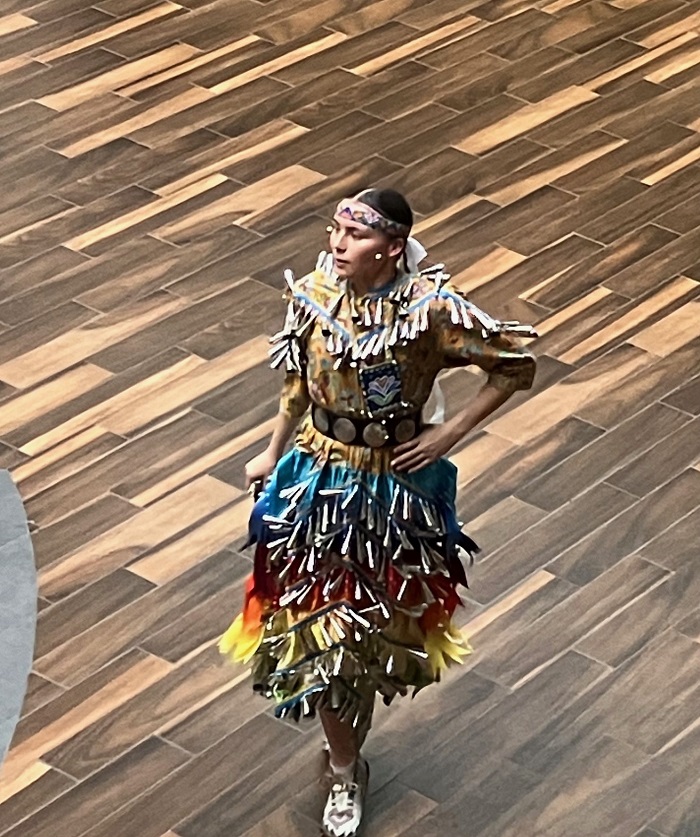
I learned that the name of the dance troupe “Little Soldier” comes from a creek that runs through their reservation with the same name. Some members have been performing for 50 years! There were four generations represented in the drum circle. All of the dances that were performed are social dances with contemporary composed songs; the dance leader explained that they reserve their traditional and ritual songs and dance for home in private. We were able to see several different types of dances, which come from different geographical regions or tribes. I learned that there are 13 Potawatomi tribes spanning the United States and Canada. Also, Miss Potawatomi, who represents all 13 tribes for the 2023-2024 year, was one of the dancers present! She was wearing a jingle dress, which has metal cones hanging from the fabric that jingle when she walks and dances, and originally came to tribe members in a dream as a healing medicine dance.
I was very moved by this performance and loved seeing not only the Little Soldier members dance, but also K-State students, staff, faculty, and Manhattan community members join in on some of the dances.
And finally, we’ll have Kinsley Searles (BA ’22, MA ’24) take us home.
Kinsley, who was a partner in the Kansas Land Treaties project, shared these observations on her final Indigenous Peoples Day as a K-State student:
Indigenous Peoples’ Day was especially important to me this year, as it was my last Indigenous Peoples’ Day at K-State. Throughout my undergraduate and graduate careers at the university, I have been so impressed with each IPD that I have attended. This year was no exception.
For this IPD, I decided to go to Dr. Dustin Tahmahkera (Comanche)’s keynote and Q&A. I was especially excited to hear Dr. Tahmahkera speak, as I had read his fantastic piece “Becoming Sound: Tubitsinakukuru from Mt. Scott to Standing Rock” in a composition and rhetoric course last year. In his keynote, Dr. Tahmahkera had a clear message: stories—especially stories by Indigenous people for Indigenous people—are powerful. According to Tahmahkera, everything is a story, whether it is a piece of art or a simple conversation. Stories are especially important in a world consumed by distorted historical retellings that make White settlers heroes and Native folks violent warriors. To combat historical distortions, Tahmahkera quoted his relative Quannah Parker: “tell [Texas] history straight up.”
Like Tahmahkera says, it is so important that we tell history straight up and engage with history critically. After all, the typical story of history that we hear is from a White perspective. Not only does this story exclude so many people from the narrative, but it also actively obscures historical truths. So, on this Indigenous Peoples’ Day, Tahmahkera reminded me of the importance of listening to Indigenous voices and Indigenous stories. Whether through art or conversation, Indigenous voices are important and must be heard.

