
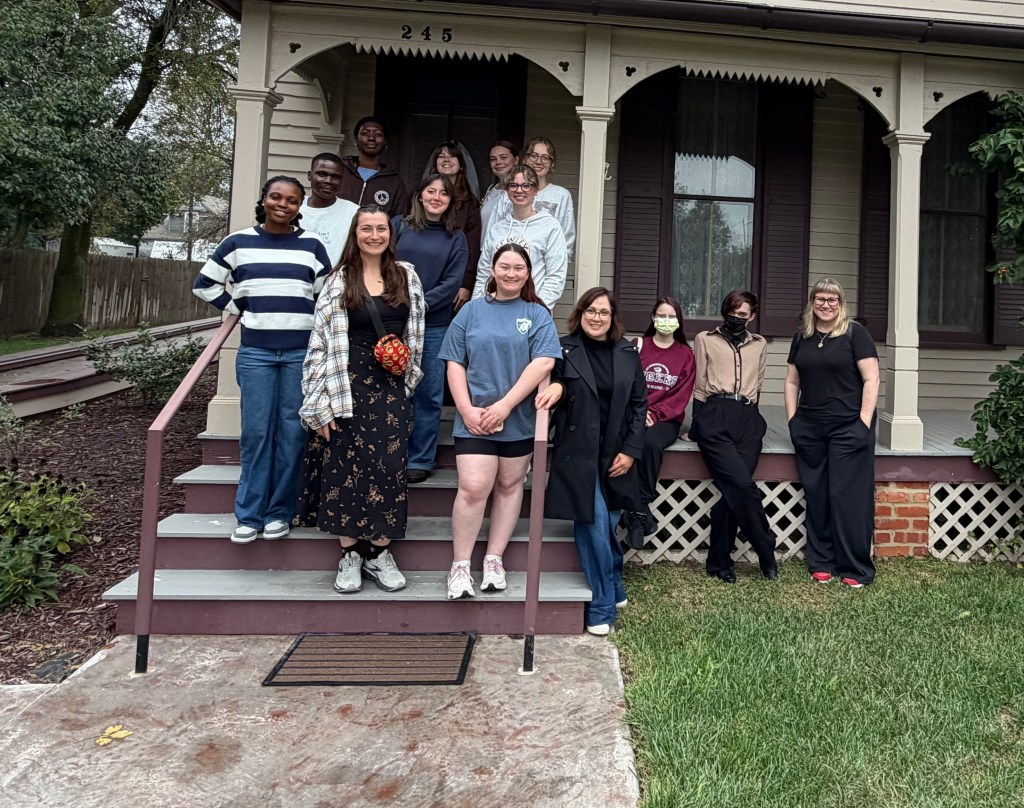
When we think about representations of immigration in American literature, we may not always begin with stories of Midwestern homesteaders. However, Willa Cather’s My Ántonia, first published in 1919, is a reflection on the complex nature of immigration on the tall grass prairie.
For students in my ENGL 655 “Immigration in American Ethnic Literature” class at Kansas State University, Cather’s novel introduced the 19th-century Bohemian homesteaders who experienced economic, physical, and psychological hardships.
The introduction to Cather’s story was not limited to the page, however. Fortunately, for my students, The National Willa Cather Center is only 2.5 hours away, in Red Cloud, NE.
On Friday, September 25, 2026, 13 of us took a road trip to the Center, and K-State alumna Rachel Olsen (MA ’08), Director of Education and Engagement, provided us a VIP tour of Willa Cather’s childhood home and various other sites important to Cather’s fiction.
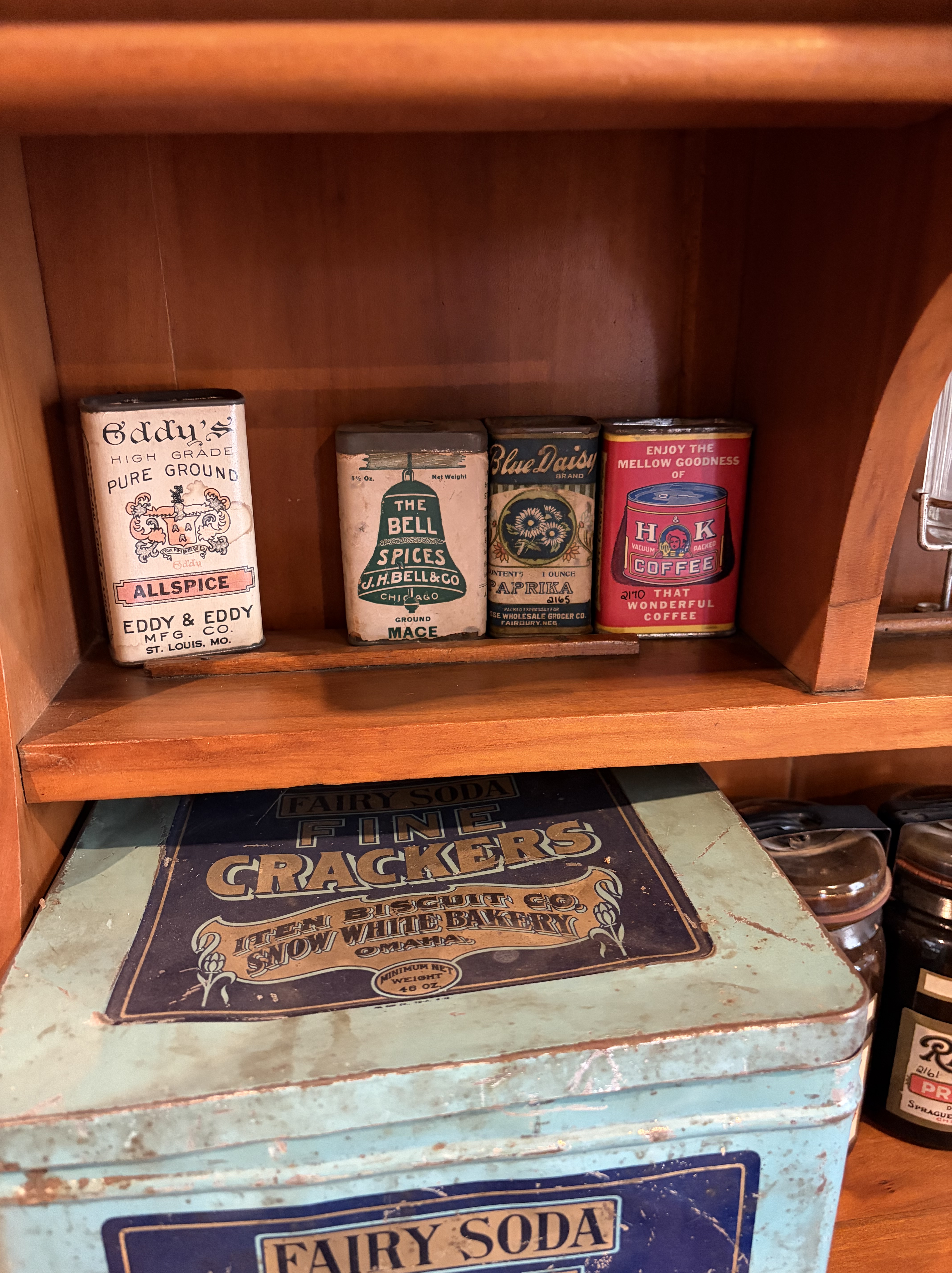
Saviour Dekonor (MA ’28) explained, “It helps me to better understand her book My Ántonia because I can now relate better to some of the things she describes in the book.” One highlight of the tour was getting to see Cather’s childhood room, complete with writing desk and original wallpaper. But students also enjoyed seeing items that offered unique and intimate perspectives on the Cather family home.
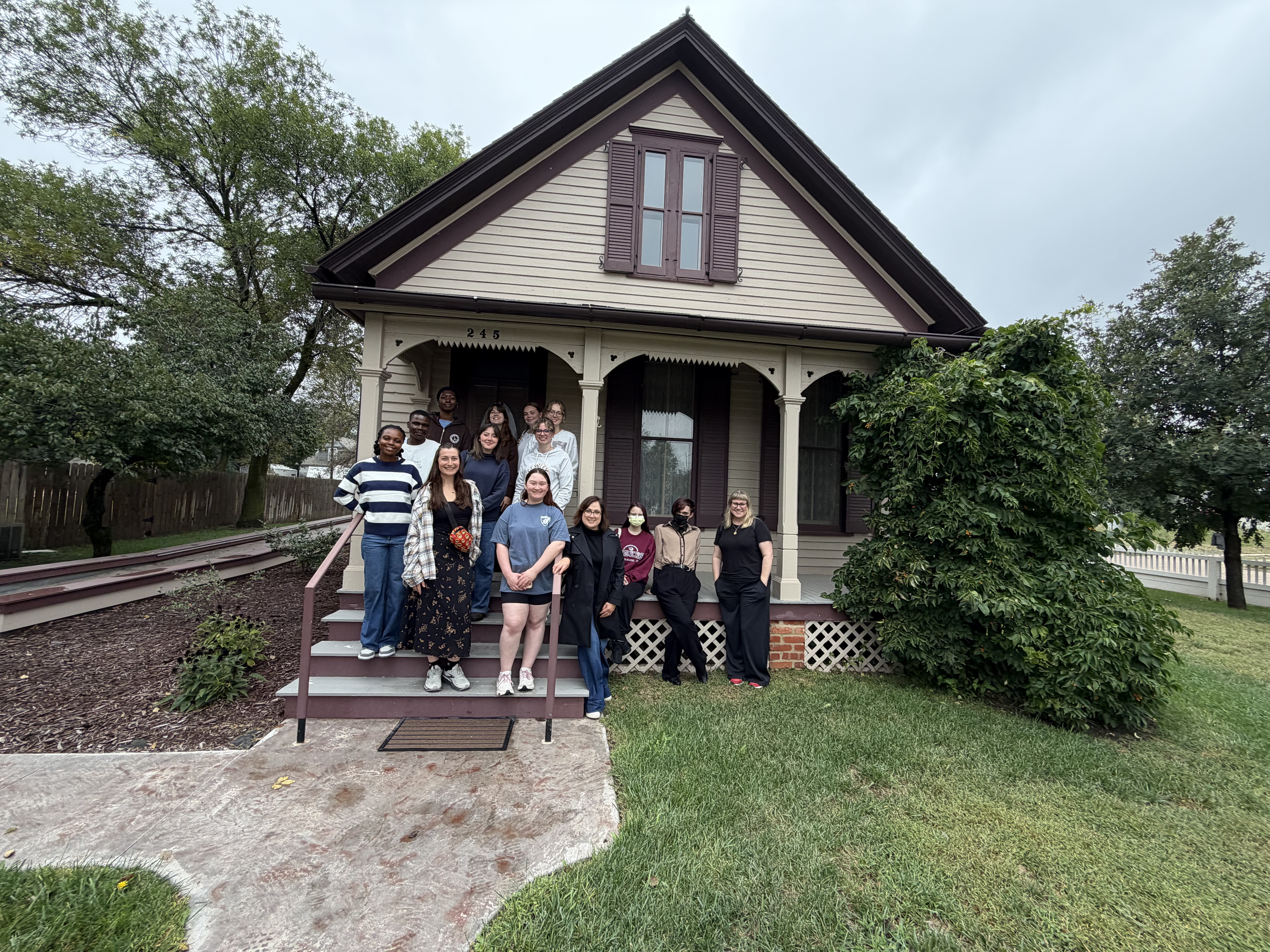
Experiencing first hand Cather’s homes, material possessions, and experiences during our tour of Red Cloud and the Cather Center was inspiring to students.
In an anonymous assessment of the trip, one student said, “The differences between each home really highlighted for me the physical representations of class differences.”
Reflecting on the indigenous communities that previously inhabited this space at an exhibit in the Red Cloud bank was also a reminder that migration and immigration are intertwined with settler colonialism and myriad other political, social, and economic realities
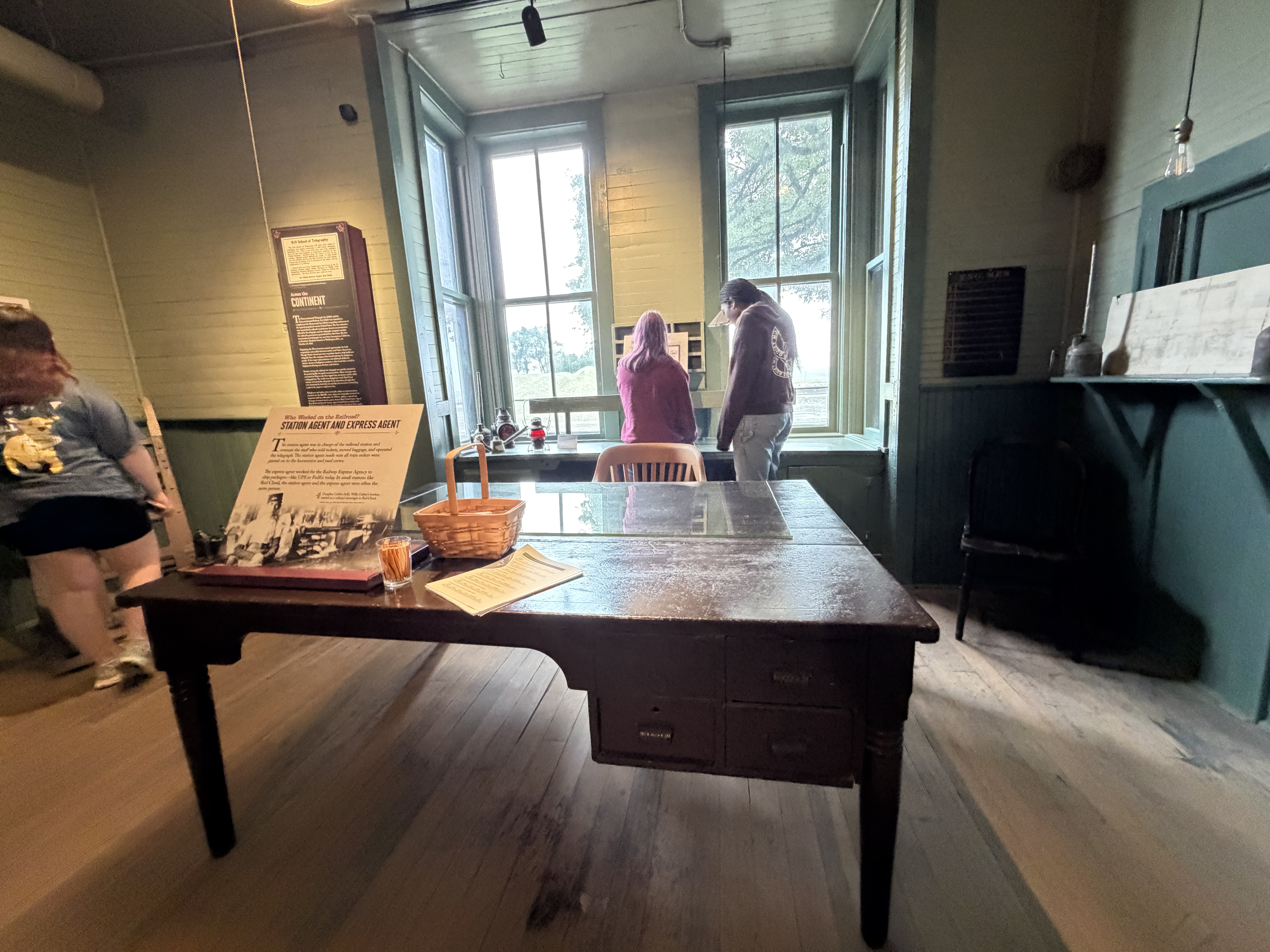
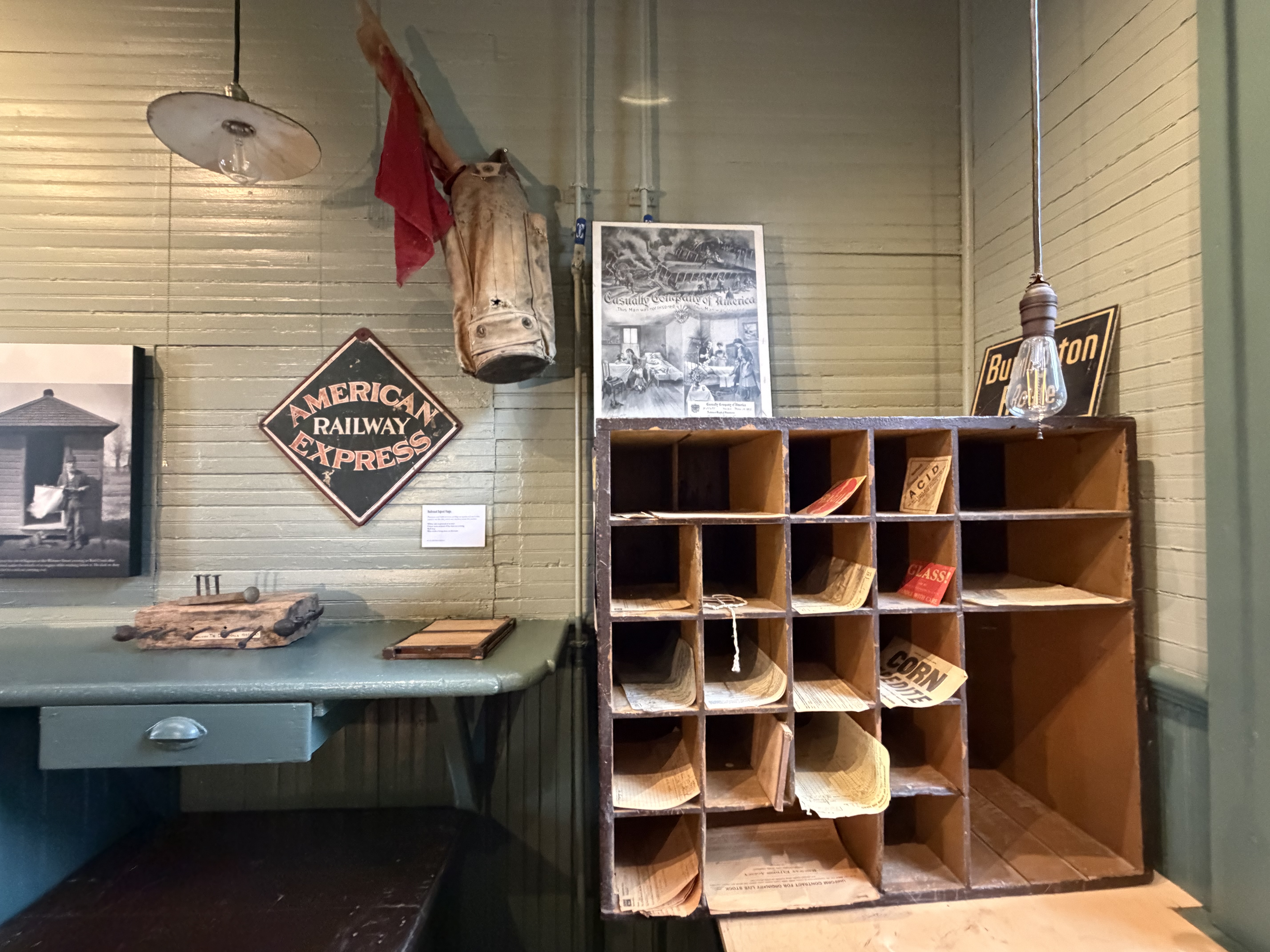
The immersive exhibit of the newly opened Red Cloud train station was extremely impactful. Emma Rupprecht (BA ’28) remarked: “I will remember how informational the tour of the train station was! It was so cool to learn about the different stories and experiences of immigrants who settled in Nebraska!”
Kierstyn Cunningham (BA ’28, English Education) “loved getting to see the railway station and reading the stories of children. It gave such a better picture that I almost want to reread [the novel] with that setting in mind.”
After the tour of homes, church, bank, and the train station, we visited the Center’s archives to see a collection of Cather’s writing tools, books, and clothing. K-State alumna Tracy Sanford Tucker, Director of Collections and Curation, also previewed for us some items that will be part of a future exhibit at the Pavelko Homestead. The experiences of Anna Pavelko, the real-life inspiration for Ántonia, came to life through the items we saw and the stories that Olsen and Tucker shared with us that afternoon.
Anna Pavelko’s struggles as an immigrant and her resilience after experiencing gendered violence caused our students to reflect on the significance of Cather’s representation of the women in this text. Megan Morrison (BA ’27) commented, “Learning more background information and details Cather left out of the novel … really helped me to picture the story—which made it feel more real and touching to me.”
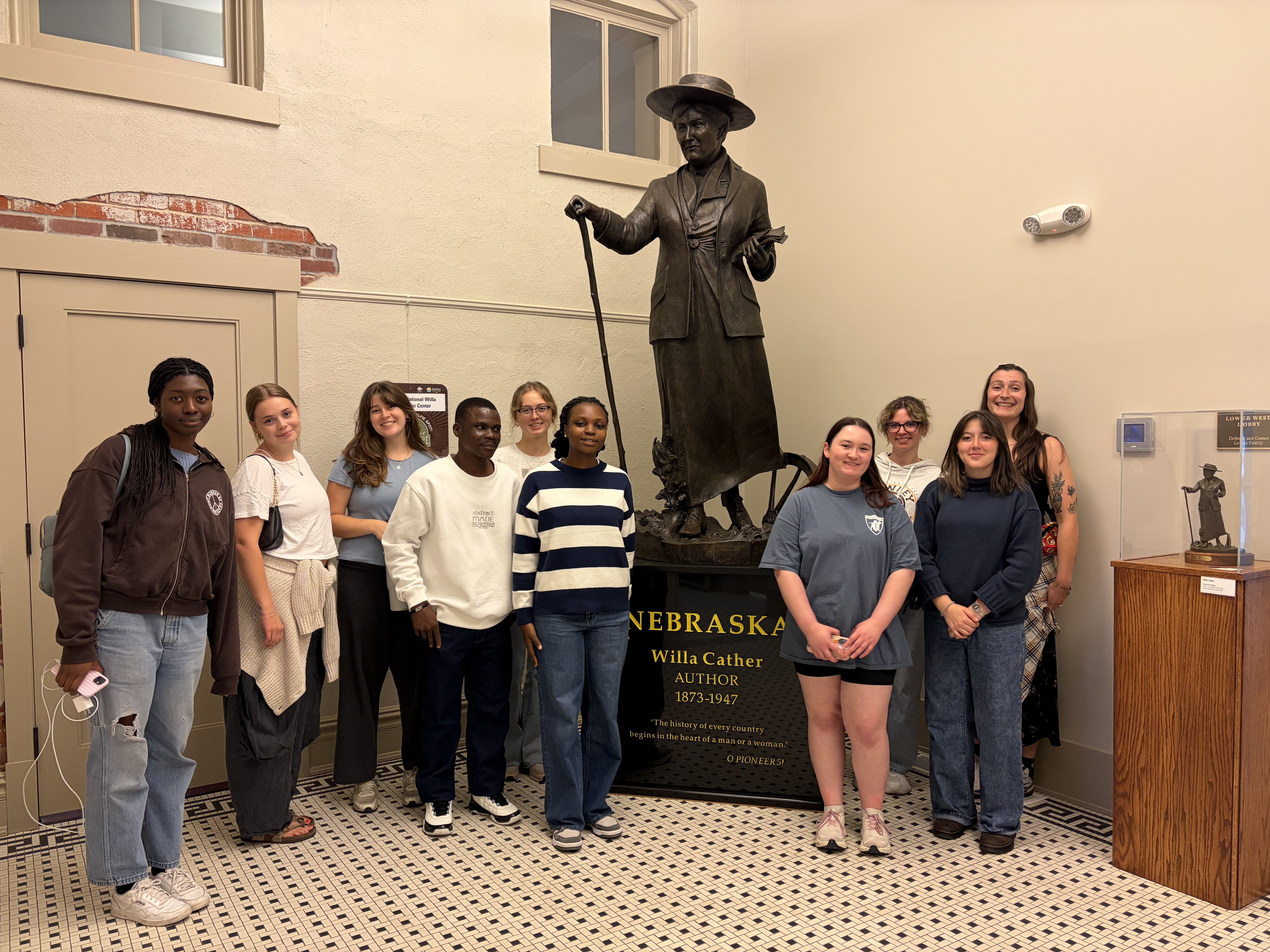
This visit increased student interest in Cather’s literature. Also, students appreciated hearing about career paths for English alumna, as Olsen and Tucker thoughtfully shared their career paths with our students after the archive visit. For instance, Beck Woodard (BA ’27, English Education), found and purchased an entire used set of Cather novels the weekend after our visit.
In her reflection on the trip, Woodard explained that the most impactful and valuable part of our visit was “Seeing how English degrees can function in real life in 2026, and that museums can curate new exhibits / artifacts from [the lives of] historical events and people.” Students’ eyes were opened to new stories and new paths.
While charting new paths is always more fun with friends, our road trip did not always take the most direct route.
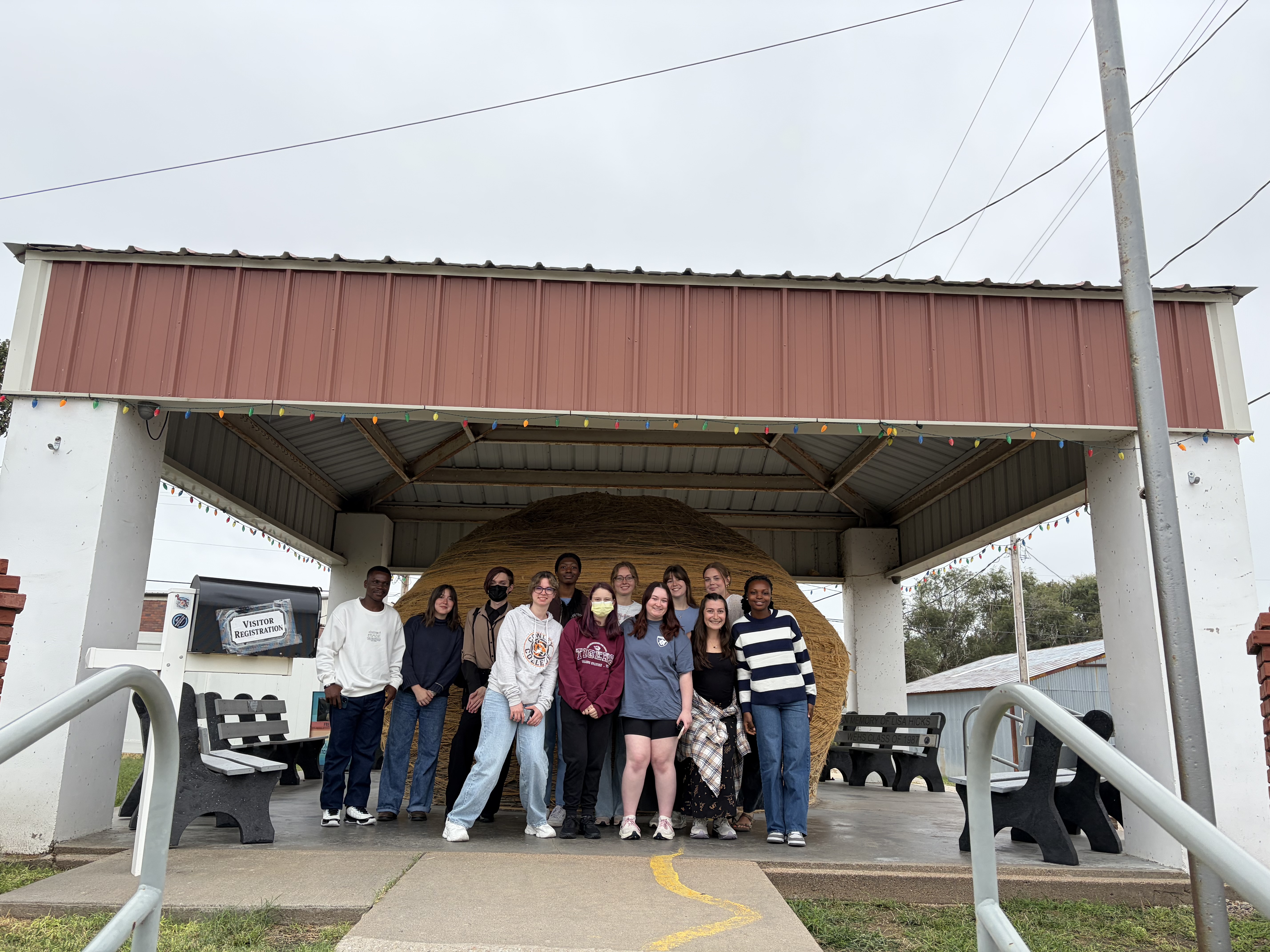
On our way to the National Willa Cather Center, we passed through Cawker City, KS, home to the world’s largest ball of sisal twine.
It goes without saying that we will never forget our spontaneous stop for a photo op and our chance encounter with the “Belle of the Ball.”
In the end, Woodard summed it up best: “The memories we made this Friday are irreplaceable; the knowledge gained will prove priceless for year to come and I hope it will inspire knowledge, field trips, and friendship for years to come. We’ll always have that one time in Red Cloud!”
— Tanya González, Professor

