When I started in the English graduate program for creative writing in 2013, I knew I wanted to be a writer and also have a career separate from writing to help support myself. I’d known that many authors had “day jobs” to help pay the bills. Every author had their own journey and situation; I’d just have to figure out my starting point. I imagined myself as a kind of Renaissance woman, one with many solid skills to apply to a career, in addition to a career in writing.
I didn’t quite know then, though, what I wanted to do. I had so many things I was interested in. Many writers also teach, and I knew of authors that worked in publishing or journalism, and those who were booksellers. I also knew there was many other options out there; a degree in English can be applicable to so many different things, and there is so much overlap with many different fields. I was sure of one thing: I wanted whatever it would be to tie back to literacy and language in some way. When I chose my graduate classes and activities, I was very conscious of getting as much experience as I could. I taught Expository Writing as a GTA and served as a PILOT tutor. I also was a volunteer during the inaugural Young Writers’ Workshop in the summer of 2014. I presented at a few conferences and participated in Banned Books Week activities. I served on the Touchstone fiction team both years, and took classes in children’s lit to support my masters project in queer young adult literature. For technical writing skills, I took ENGL 759 “Studies in Technical Communication.” There were so many opportunities to choose from, so I dove into all the things that interested me most. And, of course, all the while I continued to draft and workshop two short stories for my masters project.
The challenge I didn’t expect to navigate was a vicious resurgence in what was undiagnosed obsessive-compulsive disorder.
My “Pure O” OCD* made it hard to focus on work. As something that first appeared in my early teens, I’d be paralyzed by rumination and mental compulsions on a nearly daily basis, trying to problem solve what felt like crucial, urgent things to help alleviate the anxiety I was feeling. Intrusive thoughts would come in at the most inconvenient times, and the mental compulsions would start again, throwing off my productivity and time management. It took forever to start assignments. I worried. I over-explained. I apologized for everything. My all-or-nothing brain went into overdrive when I’d sit down to write a paper or grade student work. Often, I severely doubted my abilities as a student, as a scholar, as a teacher, and as a writer, and it was hard to trust and untangle my own thoughts and beliefs from the anxiety that filled most of each day. I didn’t know at the time what was wrong with me.
So, when the time came to apply for jobs post-graduation, I was terrified. It seemed hopeless that I’d be able to find a good fit. But, a few months after graduation, I applied for a job at the Veterinary Medical Library in the College of Veterinary Medicine and was offered the position. I’d worked at my local public library in high school, so starting at the VML felt like coming home, in a way.
What I found was that so much about libraries ties back to so many things I love and know from my studies in English: information literacy, rhetoric, attention to detail, research and entering into the scholarly conversation, and beyond. Even the teaching and tutoring skills I’d gained in grad school helped me prepare and conduct the reference interview when we got questions at the reference desk, and gave me the tools I needed to be able to assist patrons in using library databases and the like. When I started studying for my Masters in Library Science in the spring of 2020, I was able to apply my research, critical analysis, and writing skills to my coursework while simultaneously building skills in things like collection development, instructional librarianship, consumer health and health sciences librarianship, and reader’s advisory. I love working with the VML collection and working to acquire the resources needed for DVM and MPH courses. We even have a small collection of children’s and juvenile literature that explores the human-animal bond, careers working with animals, and animal facts. This job? It’s a pretty cool job, and I love what I do.
So, what did this mean for my writing goals? As I got help in therapy to diagnose and manage my OCD post-graduation, I continued to read voraciously. Writing was hard for a few years, yes, but sparks of stories and ideas continued to percolate in the back of my mind. In the spring of 2020, a few of my English grad school friends and I started a weekly book club that we still do to this day. As I read more widely, I continued to mull over the kinds of things we talked about in my creative writing classes, recognizing and understanding what the writers were trying to do. In 2021, I started back into intermittent writing/revision sessions with a few short stories and new ideas. By the end of 2023, I had mustered the courage to start submitting stories to literary journals. In 2024, I continued writing, experimenting, submitting, and getting rejections. And, in 2025, my first publication in ten years** was one of the stories I’d drafted and workshopped for my Master’s project. It was rewarding to see it in print, to see the work of all the time that had passed coming together in a way I wouldn’t have allowed myself to believe or hope in ten years ago.
There’s a lot I wish I had understood about my OCD during my time as a graduate student. I wish I’d had the tools then that I use now to manage the mental and physical compulsions. I wish it hadn’t entrenched its way into so much of my life then and now. So much time and joy, lost to oblivion. I never want my OCD to be an excuse. But, thankfully, having the knowledge and understanding now has given me the power to tackle it head on. (Feel free to ask me about Exposure Response Prevention sometime!) Even now, I struggle with mental and physical compulsions on a nearly daily basis, but as I’ve learned, growth is not linear. Some days are harder than others, but many days have small and big wins that feel incredibly rewarding.
During my two years of grad school at K-State, I had a great support system despite everything I didn’t know or understand about my mental illness. I’m grateful to all my professors for their compassion and support, for the resources I was able to use through Counseling Services during that time, and for my fellow cohort members who were there to listen, support, cheer each other on, and share tea and baked goods in the offices and graduate student bullpen when needed. I can now look back on those two years with fondness and pride. I’m still close with many of my grad school friends. Our weekly pandemic-started book club has vastly improved my quality of life. I have more brain space now to have built a regular writing regimen for myself (complete with my writing/workshop partner), and have been hard at work building out the short story collection I started with my Master’s project, while also playing around with some speculative short fiction pieces.
As an English grad student, I grew as a person as well as a writer and scholar, and the journey helped bring me back to librarianship. I can now confidently live my librarian life by day and my writer life by night. Grateful doesn’t even begin to cover it.
*While I do suffer/experience many physical compulsions, a lot of the ways that OCD presents itself for me is in mental compulsions. A great book my therapist recommended to me is “Pure O” OCD: Letting Go of Obsessive Thoughts with Acceptance and Commitment Therapy by Chad Lejeune. Additionally, here’s an article that does a nice job of breaking down Pure O and mental compulsions: https://iocdf.org/expert-opinions/how-do-i-stop-thinking-about-this-what-to-do-when-youre-stuck-playing-mental-ping-pong/.
** “A Little Sorrowed Talk,” published by Voyage YA by Uncharted Mag: https://www.unchartedmag.com/stories/a-little-sorrowed-talk/
— Heather Etelamaki (BA ‘12, MA ‘15)
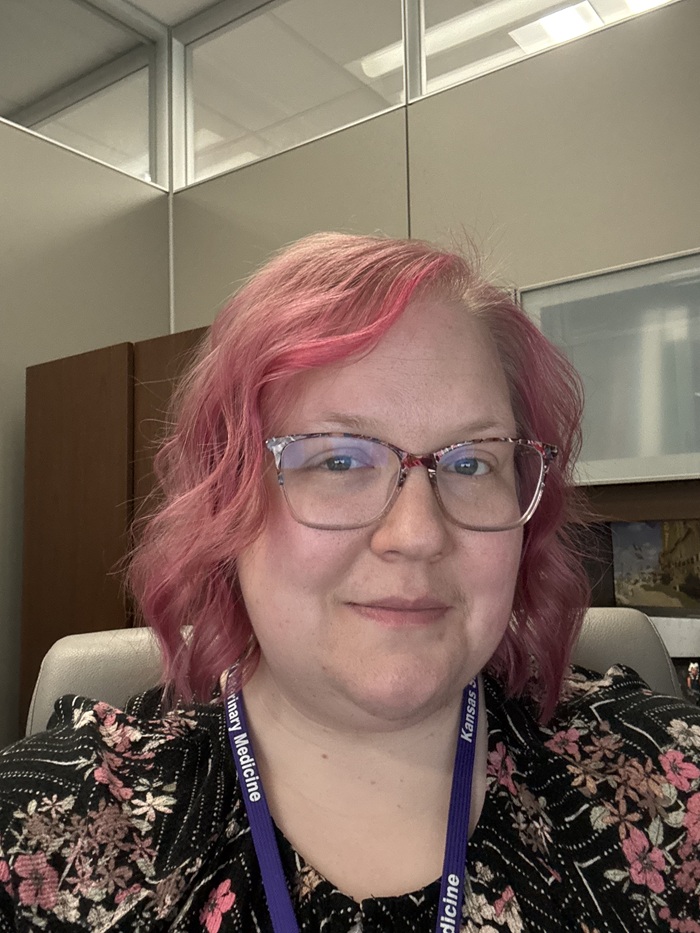
Heather Etelamaki (BA ‘12, MA ‘15), when not writing or librarian-ing, spends much of her spare time keeping her cat from knocking things over. She can occasionally be found over on Bluesky: @hetellama83.bsky.social.


One thought on “Alumni Spotlight: Heather Etelamaki”